Train Company Cracks Down on 'Short-faring' into Waterloo
Local stations may be emerging hotspots for fraudsters
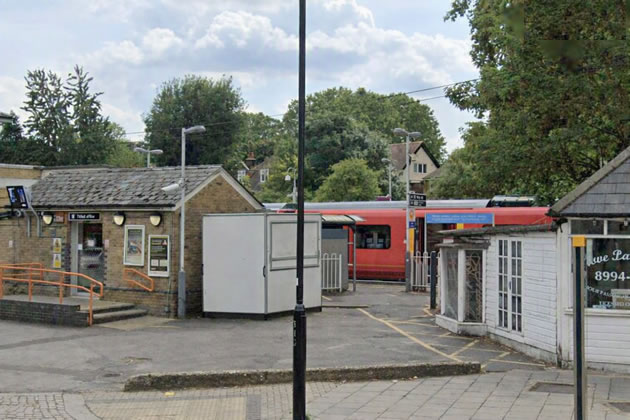
The absence of barriers at station such of Chiswick is irrelevant to the con
August 6, 2026
South Western Railway (SWR) and has launched a data-led crackdown on "short-faring" — a form of fare evasion in which passengers buy a ticket covering only part of their journey rather than paying for the full distance travelled. The operator says the practice is far more widespread than previously understood, and that closing the loophole could protect millions of pounds in lost revenue each year.
The focus of the crackdown is the short hop between Vauxhall and London Waterloo. SWR estimates that as many as 95% of barcode tickets sold for this four-minute journey are being used fraudulently, putting around £1 million of revenue at risk annually. The trick works because Waterloo's ticket gates only check whether a barcode is valid for that specific pairing of stations — not where the passenger actually got on. A cheap Vauxhall–Waterloo ticket can therefore be used to open the barriers by someone who has really travelled from far further afield, as long as nobody checks their ticket en route. The fraud is committed by people travelling from outside London who would otherwise have to pay for a much more expensive ticket.
Since launching a targeted trial at Waterloo in June of this year, SWR's revenue protection team has identified more than 150 short-faring offences in four weeks, compared with just seven in the same period last year, and recovered £45,000. Two case studies released alongside the figures illustrate how costly the practice can become over time: one commuter accumulated an £11,000 shortfall over four years travelling from Hampshire, while another evaded £20,000 over three years travelling from Surrey while also misusing a 16–17 Railcard.
Across the wider SWR and Network Rail Wessex network, around 172 million journeys are made annually. The operator estimates that 6.5 million of these are made without a valid ticket, costing close to £40 million a year. SWR says its revenue protection work has cut fare evasion by 67% since 2017, with a further 11% reduction over the past year. The figures were released to coincide with the SWR revenue protection team's appearance in the new series of Channel 5's "Fare Dodgers: At War with the Law". SWR and Network Rail Wessex's Chief Customer and Commercial Officer, Matthew Winnie, said the operator has a responsibility to "improve fairness for the millions of customers who do the right thing."
Any station offering a cheap fare into a gated London terminus could theoretically be used the same way and now that Vauxhall has been identified as the favoured station of fare dodgers it is believed that some may switch to other suburban stations such as Putney, Brentford and Chiswick. Short faring works both at stations with no gates at exit and entry points like most of those on the Hounslow Loop and those that do have barriers such as Putney, because it relies on the ticket details only being checked at exit. A passenger who genuinely boards at Woking or Basingstoke and buys a barcode ticket nominally valid from Putney would never actually pass through that station's own gateline, so its presence or absence makes little practical difference to the fraud itself.
Official station usage statistics published by the Office of Rail and Road are built from ticket sales data, not physical footfall counts. If a passenger's actual journey is from, say, Woking to Waterloo, but their ticket is priced and recorded as Chiswick–Waterloo, the statistics will count that trip as if it began at Chiswick. In principle, that means entries and exits recorded at local stations could be modestly inflated by journeys that never really started there, while flows from more distant stations would be correspondingly understated.
Recent entries-and-exits figures show growth at local stations look broadly consistent with wider post-pandemic recovery in outer-London rail travel — Chiswick rose from 589,000 to 707,000 between 2022–23 and 2024–25, Brentford from 898,000 to 977,000, and Putney from 5.12 million to 5.65 million — with nothing that stands out as an obvious anomaly. Genuine short-faring numbering in the hundreds or low thousands of journeys a year, similar to the scale SWR reports at Waterloo, would likely be too small a fraction of overall traffic to show up clearly in a simple year-on-year trend.
SWR has not said which stations are among the "emerging hotspots" its data-led monitoring is tracking but the crackdown launched at Waterloo may only be the first stage of a wider effort across the network.
Like Reading Articles Like This? Help Us Produce More This site remains committed to providing local community news and public interest journalism. Articles such as the one above are integral to what we do. We aim to feature as much as possible on local societies, charities based in the area, fundraising efforts by residents, community-based initiatives and even helping people find missing pets. We've always done that and won't be changing, in fact we'd like to do more. However, the readership that these stories generates is often below that needed to cover the cost of producing them. Our financial resources are limited and the local media environment is intensely competitive so there is a constraint on what we can do. We are therefore asking our readers to consider offering financial support to these efforts. Any money given will help support community and public interest news and the expansion of our coverage in this area. A suggested monthly payment is £8 but we would be grateful for any amount for instance if you think this site offers the equivalent value of a subscription to a daily printed newspaper you may wish to consider £20 per month. If neither of these amounts is suitable for you then contact info@neighbournet.com and we can set up an alternative. All payments are made through a secure web site. One-off donations are also appreciated. Choose The Amount You Wish To Contribute. If you do support us in this way we'd be interested to hear what kind of articles you would like to see more of on the site – send your suggestions to the editor. For businesses we offer the chance to be a corporate sponsor of community content on the site. For £30 plus VAT per month you will be the designated sponsor of at least one article a month with your logo appearing if supplied. If there is a specific community group or initiative you'd like to support we can make sure your sponsorship is featured on related content for a one off payment of £50 plus VAT. All payments are made through a secure web site. |
Related links
Train Track Upgrade Completed on Schedule 30 New Trains Now Operating on South Western Railway Local Railway Staff to Get Body-Worn Cameras New Train Stock Unused Due to Lack of Trained Drivers Will TfL Take Control of Nationalised Train Services? Stuart Broad Helps Launch New South Western Fleet Minister Commits to Renationalising South Western Railway Register for your newsletter from: |